
Although it stands today as a cornerstone of the national economy and a vital source of livelihood for millions of smallholder farming families across Indonesia, the oil palm (Elaeis guineensis) is not indigenous to the Archipelago. The plant originates from the tropical rainforests of West and Central Africa. In its native habitat, local communities have long harvested palm fruit to extract oil for culinary and daily uses. From Africa, the oil palm spread across the globe, reaching Southeast Asia in the 19th century and ultimately reshaping the global vegetable oil industry.
The history of oil palm in Indonesia began in 1848 with the arrival of four seedlings at the Bogor Botanical Gardens, then known as the Buitenzorg Botanical Gardens. Two seedlings were introduced from Bourbon (present-day Réunion/Mauritius) and two from the Hortus Botanicus in Amsterdam. During this initial phase, the plant was cultivated not as a commercial commodity, but as a botanical specimen intended for study, propagation, and experimental distribution. In essence, the story of Indonesia’s palm oil industry originated not in a commercial estate, but within a botanical garden.
Following its successful adaptation in Bogor, offspring from these four parent trees were distributed across various regions of Indonesia. One pivotal location was Deli, North Sumatra. In 1878, experimental planting trials in the region yielded exceptionally high productivity. This breakthrough proved that Southeast Asia’s tropical climate was ideal for oil palm cultivation.
The momentum toward industrialization took hold in 1911 with the establishment of the first commercial oil palm plantations in Pulau Raja (Asahan, North Sumatra) and Sungai Liput (Aceh). During the same period, development expanded to Tanah Itam Ulu, North Sumatra. This growth was soon followed by the construction of Indonesia’s first crude palm oil (CPO) mill in Sungai Liput in 1918, and a second mill in Tanah Itam Ulu in 1922.
Building on its rapid growth in Sumatra, oil palm expansion extended to the island of Kalimantan. While trial plantings in Kalimantan had been conducted since the colonial period, large-scale development accelerated significantly between the late 1970s and the 1980s. Driven by government initiatives such as the Nucleus Estate and Smallholders (NES) scheme (Perkebunan Inti Rakyat / PIR), Kalimantan emerged as one of the nation’s primary palm oil production hubs. This program expanded cultivated land while actively integrating local farmers and transmigrants into managed, independent plots tied to central processing facilities.
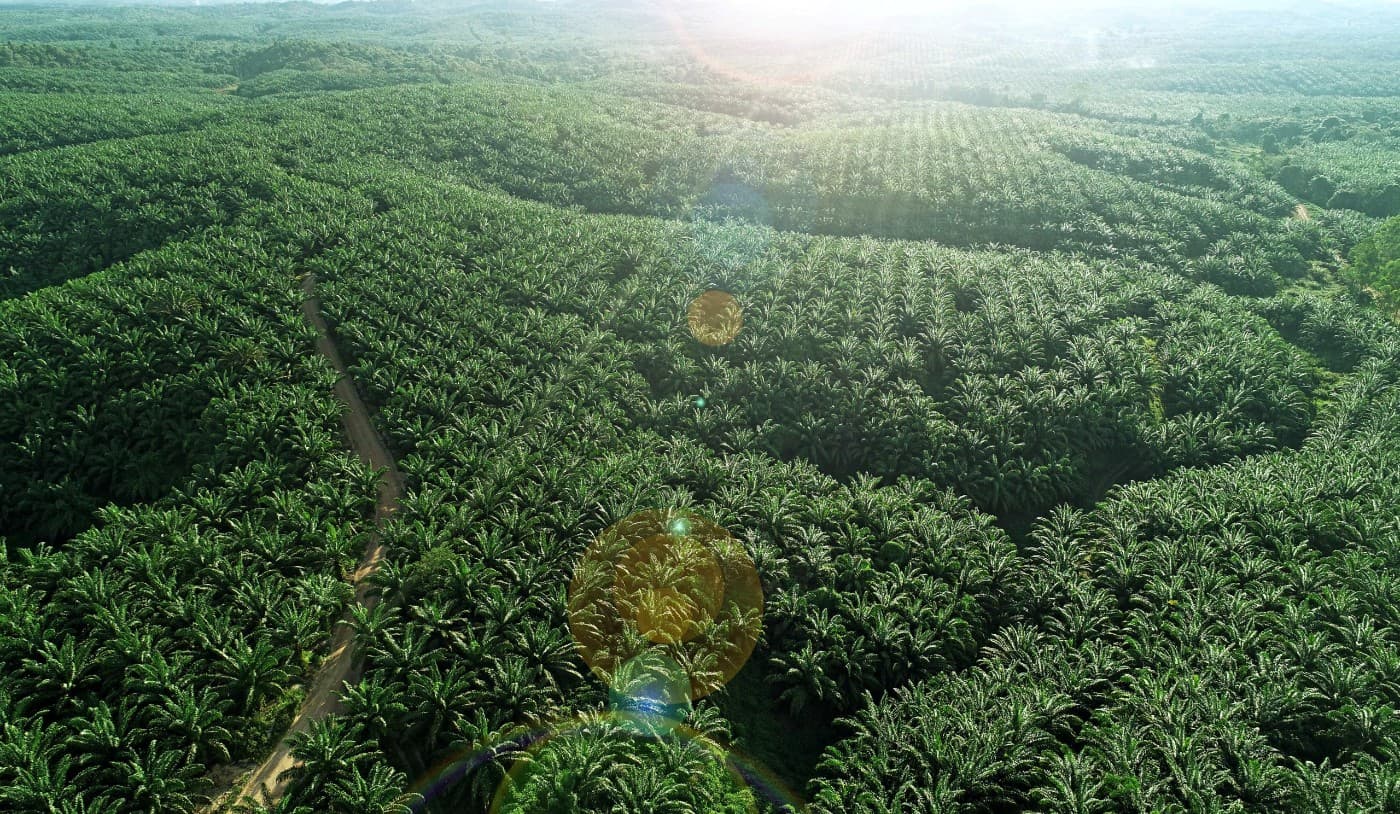
The successful expansion from Sumatra through Kalimantan was no coincidence. Fundamentally, oil palm requires specific agronomical conditions, including high humidity, stable warm temperatures, abundant sunlight, and high, well-distributed annual rainfall. These geographic and climatic conditions align seamlessly with the Indonesian landscape. This ecological harmony enabled Indonesia to transform from an introduction site into the world’s leading producer of palm oil.
Reflecting on the rich history of oil palm in Indonesia, PT Teladan Prima Agro Tbk recognizes that the immense significance of this commodity must be coupled with ethical responsibility and sound corporate governance. Success in the palm oil industry cannot be measured by output volume alone, but by the long-term sustainability of the surrounding ecosystems and communities.
Accordingly, PT Teladan Prima Agro Tbk is steadfast in implementing Best Agricultural Practices, fostering inclusive partnerships with independent smallholders, and advancing environmental stewardship. We remain convinced that through responsible management, every drop of palm oil produced will deliver sustainable value and lasting benefits for the community and the future of Indonesia.